Car transport is quoted around the movement, not from a universal rate card. Collection and delivery locations, the vehicle, its condition, access at both ends, and the transport method all affect what needs to be planned. This guide explains the questions worth asking before you request a quote.
For help choosing the right starting point, visit our vehicle transport services and then request a quote with the details of your movement.
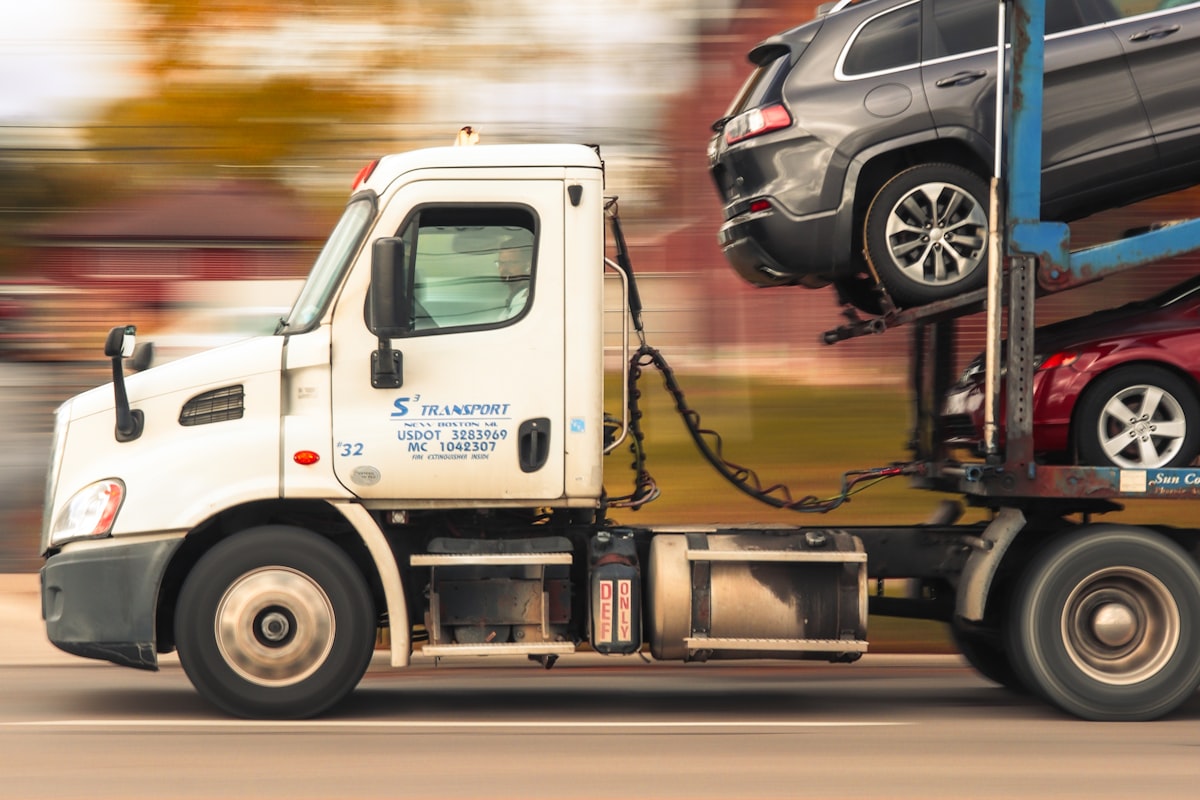
Car transport is priced per movement rather than from a national rate card. Comparing like-for-like information is more useful than relying on headline figures: check that each quote reflects the same locations, vehicle condition, access constraints, and transport method.
Three inputs set the baseline of every quote: the distance between collection and delivery, the type of vehicle being moved, and whether the car travels on an open trailer or inside an enclosed one. Everything else, from timing pressure to a locked auction compound, adjusts the price up or down from that baseline.
It is also worth understanding what kind of company you are dealing with. A fixed-quote operator like Towit prices the job, books it, and moves it. A bidding marketplace auctions your job to whoever wants it, which produces a different kind of price entirely, and we cover that difference later in this guide.
Swipe through the eight things a transport company weighs up when it prices your movement. When you understand these, every quote you receive starts making sense.
Swipe to see all eight factors
The single biggest factor. Fuel, driver hours, and wear scale with miles. But pricing is not linear: the first 50 miles are the most expensive per mile because fixed costs dominate short jobs.
Size, weight, value, and ground clearance all matter. A long-wheelbase van, a lowered supercar, and a standard hatchback are three different jobs even on identical routes.
Open and enclosed transport are planned differently. The right choice depends on the vehicle, route, collection access, and the priorities you want to discuss with the provider.
Same-day and fixed-date movements price higher than flexible ones. If your car can move when a transporter is already heading that way, you benefit from the shared routing.
Tight streets, restricted compounds, ports, and rural lanes add loading time and planning. Easy access at both ends keeps the job efficient and the price down.
A car that cannot be driven onto a trailer needs extra planning. Describe whether it rolls, steers, and brakes, and explain the access at collection and delivery before requesting a quote.
Transport pricing quietly depends on what the trailer does after your delivery. Routes with likely return work price keener than one-way trips into empty territory.
Ask what information the provider needs before confirming a movement, and compare the scope of each quote rather than relying on a headline figure alone.
Distance matters, but it is only one part of planning a movement. A provider also needs to understand the vehicle, collection and delivery access, running condition, and the transport method being considered.
Short and long movements can involve different constraints. Give the same complete information to every provider so that you can compare the scope of each quote on a like-for-like basis.
When a quote is unclear, ask which vehicle, route, access, and collection details it is based on before deciding.
Send the collection and delivery locations, vehicle details, running condition, and access notes on WhatsApp.
Open transport, on a trailer like the Brian James T Transporter, is the workhorse of the industry. The car is properly secured, professionally handled, and fully visible to weather and road. For dealer stock, auction purchases, lease deliveries, and everyday cars, it is the sensible, economical choice, and it is what most of the UK market runs on.
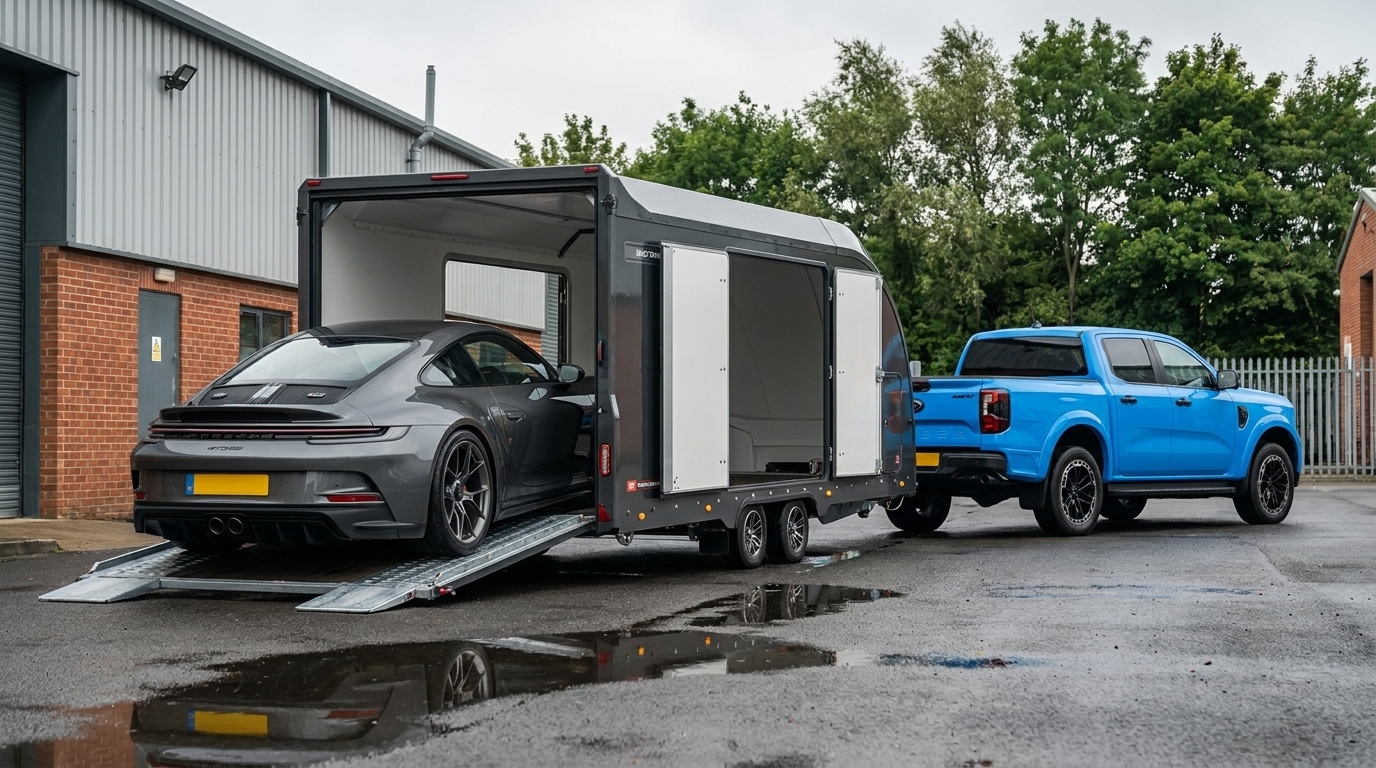
Enclosed transport, in a trailer like the Brian James Race Transporter 7, wraps the car in a protected environment for the whole journey: no rain, no road spray, no stone chips, no salt, and no eyes on it. The trailer has a powered tilt bed for low cars and soft over-wheel straps that never touch bodywork. It costs more because the equipment is more specialised and the whole trailer is dedicated to protecting one valuable vehicle.
The choice between transport methods depends on the vehicle, route, collection access, and the priorities for the movement. Our enclosed vs open car transport guide explains the questions to consider before you request a quote.
The table below illustrates the type of detail that can change how a movement is assessed. It is not a rate card or a set of route prices.
| Route | Approx. Distance | Open transport discussion | Enclosed transport discussion |
|---|---|---|---|
| Regional movement | Route-dependent | Quote based on movement details | Quote based on movement details |
| Long-distance movement | Route-dependent | Quote based on movement details | Quote based on movement details |
| Urban collection or delivery | Access-dependent | Quote based on movement details | Quote based on movement details |
| Vehicle with limited mobility | Condition-dependent | Quote based on movement details | Quote based on movement details |
| Short movement | Access-dependent | Quote based on movement details | Quote based on movement details |
The examples are not intended to set a price difference between transport methods. Discuss the vehicle, route, collection access, and any handling requirements so a provider can assess the specific movement.
A vehicle that does not start, select gear, or move under its own power needs a more detailed discussion. See our non-runner transport guide and share its condition, whether it rolls, steers, and brakes, and the collection access.
Low ground clearance or other handling requirements should also be mentioned before a movement is planned. The provider can assess the vehicle and site details rather than making assumptions about a transport method.
Include any collection restrictions, delivery requirements, vehicle dimensions, or site information that could affect the movement in your initial enquiry.
When comparing quotes, ask what is included, which vehicle and route details were used, and how the collection and delivery will be assessed. Request written confirmation of the terms that apply to your movement before booking.
Where condition records or reporting are important to you, ask whether they are available and how they will be provided. The relevant service should be clear before you agree to the movement.
Providers can use different booking models. Before deciding, compare the movement details they have considered, the terms they provide, and how you can clarify questions about the collection or delivery.
Ask for the information relevant to your movement in writing and make sure the vehicle, route, condition, and access details have been understood before booking.
Different providers use different booking models. Ask who will handle the movement, what information they need, and how the scope of the quote is defined before deciding.
There are four levers that genuinely reduce price. First, flexibility: if the car can move any day this week rather than Thursday at 2pm, it can be slotted onto a route the transporter is already running, and that efficiency is shared with you. Second, honest choice of trailer: enclosed protection is essential for some cars and unnecessary for others, so do not pay for enclosure a ten-year-old family SUV does not need.
Third, accurate information. Every surprise on the day, from a non-runner nobody mentioned to a car parked in an underground garage the trailer cannot reach, costs time and can require a second visit. Telling the full story up front gets you the right price once, not a cheap price followed by an argument. Fourth, sensible access: if your street is tight, agreeing a nearby meeting point in advance keeps loading quick and safe.
What does not save money: choosing a quote purely because it is the lowest number on the screen, skipping the condition report, or letting a valuable car travel on equipment that was not designed for it. Those savings have a habit of becoming the most expensive part of the whole transaction.
Before booking anything, plenty of people price the do-it-yourself routes, so let us do that honestly. Option one is driving the car yourself. For a running, insured, road-legal car this is the obvious baseline, but it is rarely free: a one-way collection means a train or flight to the car, fuel and possibly an overnight stay, a full day or two of your time, and several hundred miles added to the odometer. On a nearly-new or collector car, the mileage alone can cost more in value than professional transport costs in cash, and none of it comes with a condition record if something goes wrong en route.
Option two is hiring a trailer or transporter van. The hire itself looks cheap until you add the tow vehicle capable of pulling a loaded trailer legally, the licence entitlement to tow it, the insurance questions nobody reads until afterwards, and the experience of loading, strapping, and reversing a three-and-a-half tonne combination. Loading is where cars get damaged, and it is exactly the part first-timers do under pressure in a strange car park. For a runabout the risk may be tolerable; for anything with value it seldom is.
The honest summary: DIY suits short moves of cheap, running cars by people already comfortable with trailers. Everything else is usually cheaper done professionally once time, mileage, risk, and equipment are counted at their real prices.
Everything above describes one-off pricing, but a large share of UK vehicle movements are trade work: dealers delivering sold cars, groups rebalancing stock between sites, leasing companies managing handovers, and traders clearing auction compounds weekly. Volume changes the economics for both sides, and pricing should reflect it.
Regular work lets a transporter plan routes instead of reacting to them, fill return legs instead of running empty, and schedule fixed days instead of quoting from scratch. Those efficiencies are real money, and a sensible operator shares them: per-movement rates on standing arrangements come in below one-off pricing for the same routes. At Towit, dealers and trade customers can set up recurring delivery work and scheduled site-to-site movements priced with volume in mind.
If you are on the trade side, the useful move is to describe your typical pattern, sites, volumes, and deadlines rather than asking for a generic rate card. Vehicle logistics priced against your actual flow is consistently cheaper than the same movements priced one at a time, and it turns transport from a weekly negotiation into infrastructure.
Include the collection postcode, delivery postcode, make and model, running condition, access notes, and any timing constraints when requesting a quote. Those details allow the provider to assess the movement rather than rely on a generic route estimate.
If your movement is more specialist, the same principles from this guide apply with extra detail on top: see our guides to supercar transport, classic car transport, auction collection, and UK to Europe movements.
Share the collection and delivery locations, vehicle details, running condition, and access notes.
The pricing questions we answer most often.