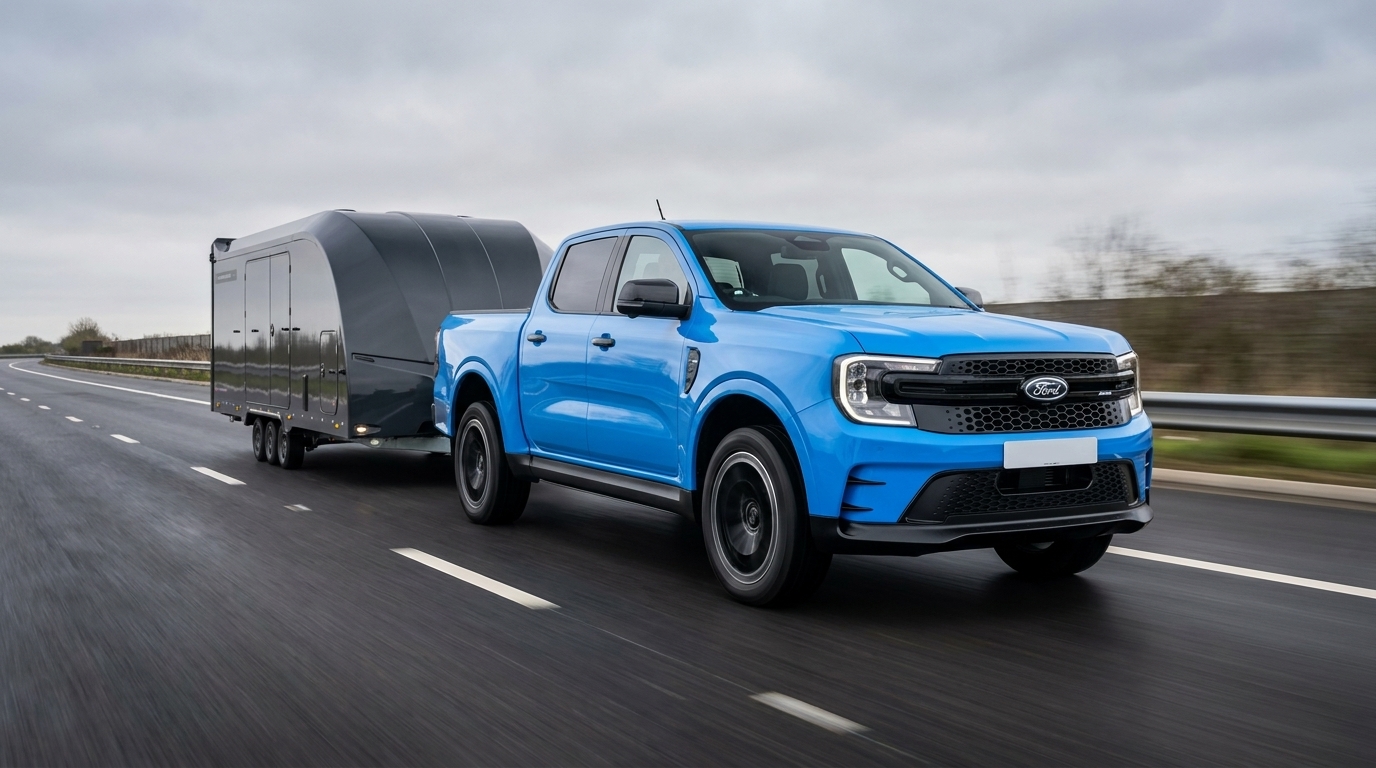
Choosing between enclosed and open car transport starts with the vehicle, route, and collection access. This guide explains the practical differences so you can decide what to discuss when requesting a quote.
Share the vehicle, collection and delivery postcodes, and any access requirements. Ask about open and enclosed options for your journey.
Open transport carries the car on an uncovered trailer, exposed to weather and road spray. Enclosed transport places it inside a covered trailer for added protection and privacy. Compare quotes for your actual route, and check loading access and ground clearance with the transporter before choosing.
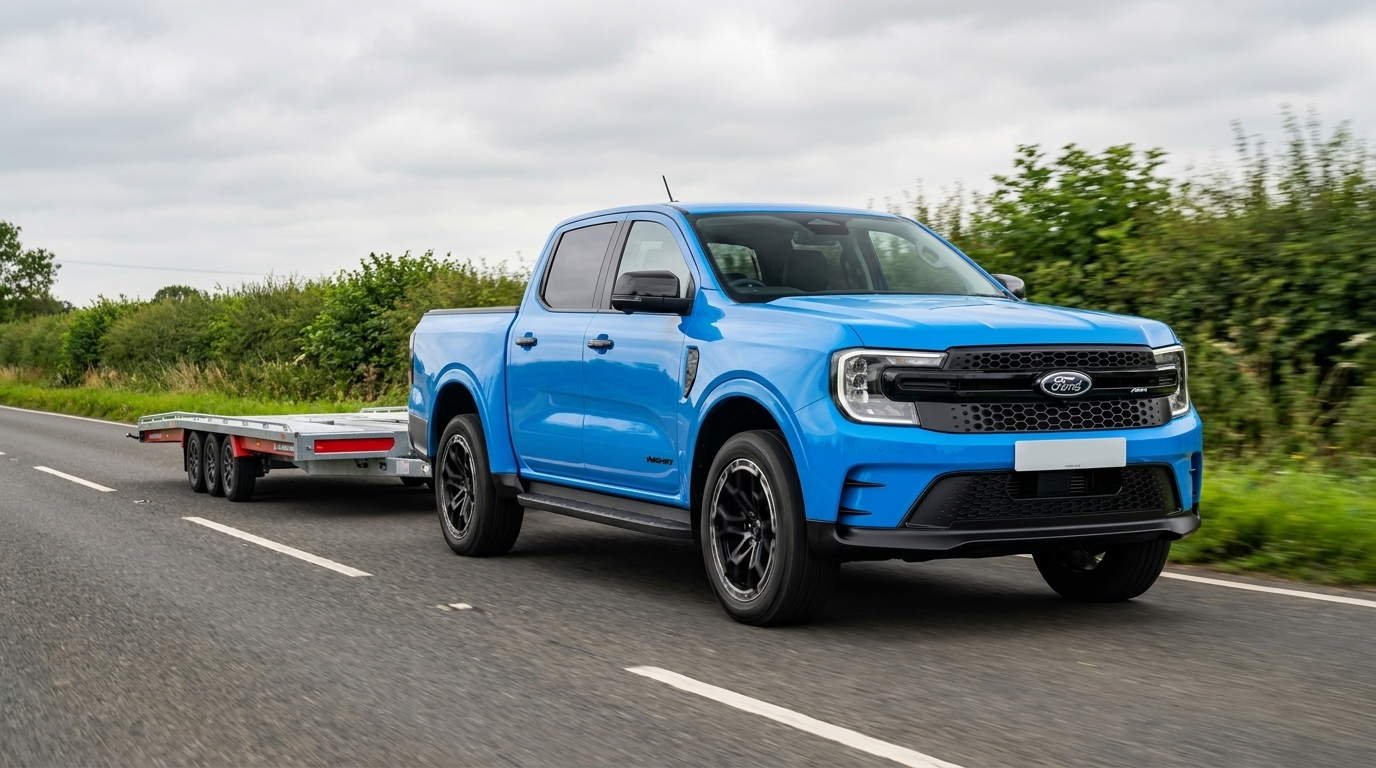
Open transport means the car travels on an uncovered, purpose-built trailer. At Towit that is the Brian James T Transporter, a professional single-car trailer, not a tow dolly or a farm flatbed. The car is driven or winched on, secured with soft straps over the wheels, and photographed as part of a condition report before it moves.
Open transport is the backbone of the UK vehicle logistics industry. Dealer stock moves this way, auction purchases move this way, lease deliveries move this way. It is safe, professional, and significantly cheaper than enclosed, because the equipment is simpler and the operating costs are lower.
What open transport does not do is isolate the car from the environment. It travels through the same rain, spray, and road grime as everything else on the motorway, and there is a small but genuine risk of stone chips from debris, exactly as there would be if the car were driven. The difference from driving is that it arrives with no added mileage, no wear, and a documented condition at both ends.
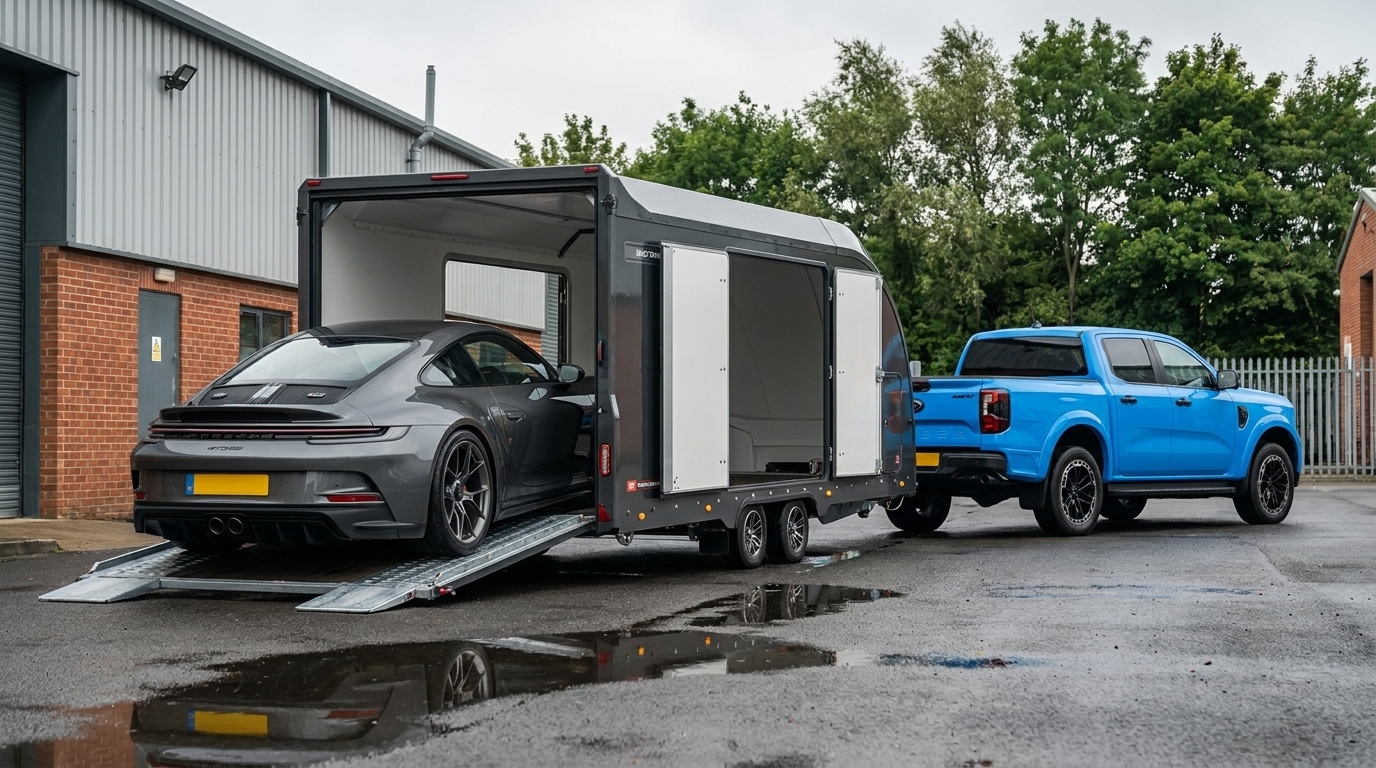
Enclosed transport means the car travels inside a fully bodied trailer. At Towit that is the Brian James Race Transporter 7, and the details are what justify the premium. A powered tilt bed brings the loading angle down low enough for splitters, diffusers, and classic cars with long overhangs. Soft over-wheel straps hold the car by its tyres, so no strap, hook, or chain ever touches paintwork, chassis, or suspension. And the enclosed body isolates the car completely: no rain, no spray, no salt, no stone chips, no ultraviolet, and no eyes on it from loading to unloading.
Enclosure changes the security picture as much as the weather picture. A covered trailer at a motorway services is anonymous; nobody knows whether it contains a hypercar or a hatchback. For rare cars, unregistered cars, pre-launch vehicles, and anything with a social media following, that invisibility is often the primary reason for the booking.
This is the standard we run for supercar transport, classic car transport, movements to and from PPF installers, and event deliveries where the car must arrive ready to display.
| Open Transport | Enclosed Transport | |
|---|---|---|
| Typical cost | £1.20 – £2.00 per mile | £2.00 – £3.50 per mile |
| Weather protection | None in transit | Complete |
| Stone chip risk | Small but real | Eliminated |
| Privacy | Car fully visible | Car invisible throughout |
| Low car loading | Standard ramps | Powered tilt bed, very low angle |
| Securing method | Soft over-wheel straps | Soft over-wheel straps |
| Condition report | Included | Included |
| Best for | Dealer stock, auction buys, everyday cars | Supercars, classics, fresh paint, rare cars |
Note the rows that are identical. Professional securing and condition reporting are not enclosed-only luxuries; they are the baseline of doing the job properly on either trailer. The premium buys isolation and low-angle loading, nothing less and nothing more.
Swipe through the scenarios
Discuss enclosed transport. Value, ground clearance, and presentation requirements may all affect the method. Share those details when requesting a quote.
Enclosed. Original or restored paint, brightwork, and decades-old seals do not belong in motorway spray. Salt exposure alone settles the argument in winter.
Enclosed. Curing film and fresh paint should not face debris or grime. One journey can undo the studio's work before the customer ever sees it.
Open. Retail stock moving between sites or to prep needs professional handling and a condition report, not isolation. Save the premium.
Usually open. A trade runabout goes open. A collector lot or something low and valuable from a classic sale goes enclosed. Value decides, not the venue.
Depends on the car. Salt spray is brutal on classics and anything with exposed metalwork. Everyday cars cope; special ones should travel enclosed in the salt months.
Enclosed. The car must arrive detailed and stay that way. Enclosed delivery means it rolls off ready to display, not ready for a wash.
Open, usually. An everyday car relocating with its owner travels open. If the garage also holds a 911 from 1973, that one travels enclosed.
Tell us the car and the journey on WhatsApp. We will recommend honestly, even when the answer is the cheaper option.
Cost and method should be discussed together, using the vehicle, route, and collection access rather than a generic comparison. A provider can then assess the details that affect the movement.
Our car transport cost guide explains the information that helps make a quote specific. You can also review Towit's vehicle transport services before getting in touch.
It is worth being precise about the risks, because they are not evenly distributed. The most common transit damage across the industry is not dramatic: it is strap damage from incorrect tie-downs, ramp contact on low cars during loading, and stone chips on open trailers. Weather itself rarely damages a car on a single journey; what it does is degrade presentation, embed grime, and, with winter salt, start processes on classics that show up months later.
That distribution explains where the money should go. Correct securing, soft over-wheel straps, and low-angle loading equipment eliminate the biggest risks on either trailer type, which is why they are standard at Towit on both. Enclosure then removes the remaining environmental risks entirely for the cars that cannot afford them.
It also explains why the photographic condition report matters so much. Damage claims live and die on evidence. A timestamped photographic record at collection and delivery means that if something does happen, it is identified immediately, attributed correctly, and resolved without argument.
An open trailer advertises its cargo at every junction, fuel stop, and overnight halt. For most cars that is irrelevant. For a rare classic, a high-profile supercar, or a car connected to a known collection, it is free intelligence for anyone paying attention, and enough owners have learned this the hard way that discretion is now one of the most common reasons for choosing enclosed transport.
Enclosure solves it completely. From the moment the door closes at collection, nobody on the route knows what is inside. Deliveries can be quiet, direct, and unremarkable, which is exactly what most owners of exceptional cars want. If this is a factor for you, mention it when you book; collections can be arranged with discretion at both ends.
Abstract comparisons only go so far, so here is what each service looks like on the day. An open movement: the transporter arrives with the T Transporter, walks around the car photographing it for the condition report, and confirms anything you have flagged. The car is driven up the ramps, positioned, and strapped over all four wheels. The driver checks tension, confirms the paperwork, and leaves. At the other end the process runs in reverse: unload, walk-around against the collection photographs, handover. The car has crossed the country in the open air, exactly as it would have done being driven, minus the miles and the wear.
An enclosed movement starts the same way, with the condition report, then diverges. The Race Transporter 7's bed tilts and lowers, and the car is driven or winched aboard at a shallow angle, with spotting at the front edge if clearances are tight. Inside, it is strapped by its tyres, the bed levels, and the body closes around it. From that moment until the door opens at delivery, the car effectively ceases to exist as far as the outside world is concerned: no weather, no debris, no onlookers at the services. For owners handing over something precious, watching the door close is usually the moment the shoulders drop.
Both versions end identically: a delivery walk-around against the collection photographs, and a handover with the condition confirmed rather than assumed. The difference is purely what the car experienced in between.
Open transport is not a universal answer. The trailer type is only one part of the decision. Ask what information the provider needs to plan the vehicle, route, and collection access.
Enclosed transport is not determined by vehicle value alone. Consider the vehicle's condition, ground clearance, route, and presentation requirements when discussing the available options.
Myth three: a car cover on an open trailer splits the difference. It does the opposite. A cover flapping at motorway speed for four hours micro-abrades paint wherever it touches, traps grit against the surface, and can work loose entirely. No professional recommends soft covers on open trailers; if the car needs covering, it needs enclosing.
Myth four: short journeys do not need the enclosed decision. Stone chips do not check the trip distance, and loading risk on a low car is identical on a five-mile move and a five-hundred-mile one. The decision follows the car, not the mileage; only the price difference shrinks on short runs.
Run your car through five questions. One: would a stone chip be a real financial or emotional cost? Two: is the car low enough that standard ramps risk contact? Three: has it just had paint, wrap, PPF, or detailing work? Four: would you prefer nobody knew this car was moving? Five: is it irreplaceable or difficult to put right? Any yes points to enclosed; five noes and open transport will do the job properly for less money.
Whichever option you are considering, send the vehicle, route, collection access, and any handling requirements when requesting a quote. This gives the provider the details needed to discuss a suitable method.
And if the checklist splits down the middle, two yeses and three noes, ask for both prices and decide with real numbers in front of you. The gap between the quotes is the actual cost of certainty for your specific journey, and seeing it in pounds usually resolves the dilemma in about ten seconds. Some owners look at the difference and choose the protection; others look at the same difference and correctly conclude their car does not need it. Both are right answers, because the point was never to sell you the bigger trailer; it was to match the journey to what the car has to lose.
The enclosed-versus-open decision is not fixed for a given car; it moves with the calendar. British roads are salted from roughly October to April, and salt spray at motorway speed is the harshest environment a car meets all year. A car that travels open quite happily in June may deserve enclosure in January, particularly classics, anything with exposed brightwork, and cars that will go straight into storage without a wash. If a movement is flexible, sometimes the cheapest upgrade is not the trailer but the date.
Summer brings its own patterns: show season and event season concentrate enclosed demand around specific weekends, so concours and meet deliveries reward early booking. Auction cycles run year-round, but the buying-season peaks in spring and early autumn tighten open-transport availability around big sale weeks. None of this changes the fundamental decision logic; it changes how early you should act on it.
For owners who move cars repeatedly, the practical pattern is a simple annual map: enclosed movements planned around winter and events, open movements batched into the kinder months, and one transporter who knows the cars. It costs nothing to think this way and it consistently buys better availability and better prices than deciding everything the week it becomes urgent.
When comparing options, ask what the quote includes and how the provider will assess the vehicle, route, and collection access. Written confirmation of the terms relevant to the movement is useful before booking.
That parity is also your sharpest tool for comparing providers. If an open-transport quote is dramatically cheaper than the market, the difference is rarely efficiency; it is usually one of those four pillars quietly missing. Ask which one. A provider who maintains the same process across both trailer types is telling you something about how they treat every car; a provider whose open service is a different, looser business is telling you something too. Choose the trailer for your car's needs, but choose the operator for the process, because the process is what actually protects the car when something unexpected happens.
We quote open and enclosed side by side where it is a close call, so you can decide with real numbers.
The questions owners ask when choosing between trailers.